Introduction
In today’s volatile financial landscape, risk management has evolved from a back-office function to a strategic imperative. The Financial Risk Manager (FRM) certification has emerged as the gold standard credential for professionals looking to build a robust career in risk management. Whether you’re a fresh graduate exploring career options or an experienced finance professional seeking to upskill, understanding the FRM certification and its career implications is crucial for making informed decisions about your professional future.
What is FRM Certification?
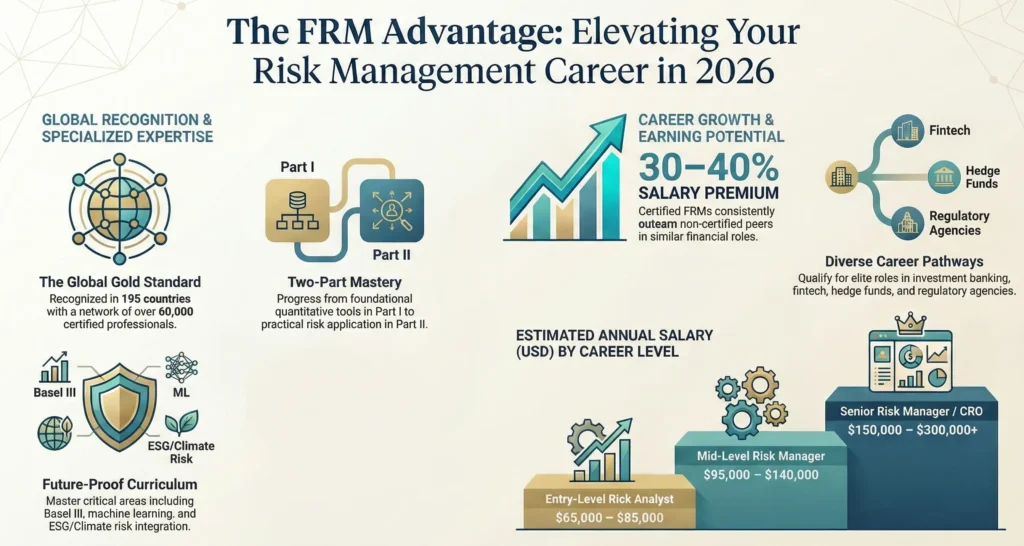
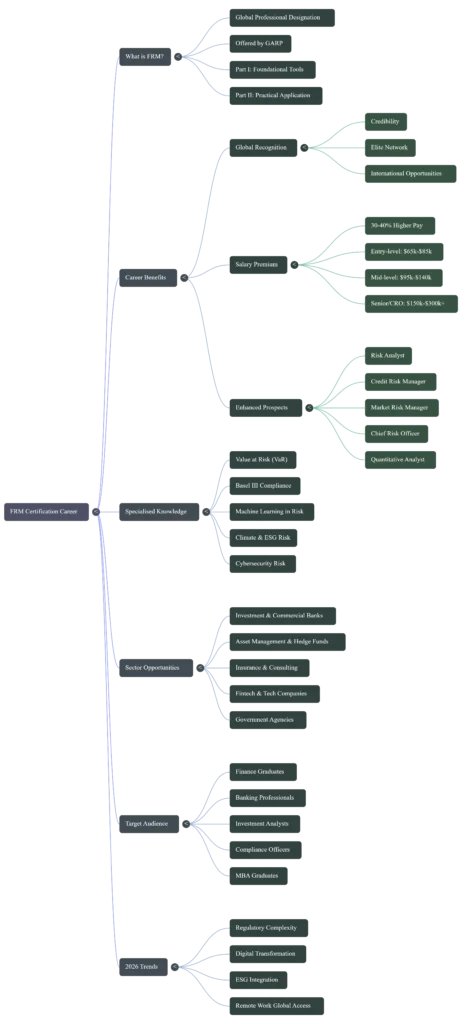
The Financial Risk Manager (FRM) certification is a globally recognized professional designation offered by the Global Association of Risk Professionals (GARP). Established in 1997, the FRM certification validates your expertise in assessing and managing financial risk across various domains including market risk, credit risk, operational risk, and investment management.
The FRM program is divided into two rigorous examinations:
FRM Part I focuses on the foundational tools and techniques used to assess financial risk, including quantitative analysis, financial markets and products, and valuation models.
FRM Part II delves into the practical application of risk management concepts, covering market risk measurement, credit risk management, operational risk, liquidity risk, and current issues in financial markets.
Why FRM Certification Matters in Your Career
1. Global Recognition and Credibility
The FRM certification is recognized by financial institutions, regulatory bodies, and corporations worldwide. Holding this credential immediately signals to employers that you possess specialized knowledge in risk management and have demonstrated commitment to professional excellence. With over 60,000 FRM certified professionals across 195 countries, you join an elite global network that opens doors to international career opportunities.
2. Enhanced Career Prospects and Job Security
Risk management has become indispensable in the financial industry, especially after the 2008 financial crisis and subsequent regulatory reforms. Organizations are mandated to maintain robust risk management frameworks, creating sustained demand for qualified risk professionals. FRM certification holders find themselves in a strong position when competing for roles such as:
• Risk Analyst
• Credit Risk Manager
• Market Risk Manager
• Chief Risk Officer
• Regulatory Risk Manager
• Portfolio Risk Manager
• Enterprise Risk Manager
• Quantitative Analyst
The certification demonstrates your ability to identify, assess, and mitigate risks, making you an invaluable asset to any organization navigating complex financial environments.
3. Significant Salary Premium
One of the most tangible benefits of FRM certification is the substantial salary advantage it provides. According to industry surveys, FRM certified professionals earn approximately 30-40% more than their non-certified counterparts in similar roles.
In major financial hubs, FRM holders can expect competitive compensation packages:
• Entry-level risk analysts: $65,000 – $85,000 annually
• Mid-level risk managers: $95,000 – $140,000 annually
• Senior risk managers and CROs: $150,000 – $300,000+ annually
These figures vary based on geographic location, industry sector, and years of experience, but the certification consistently correlates with higher earning potential throughout your career trajectory.
4. Specialized Knowledge That Sets You Apart
The FRM curriculum covers contemporary risk management challenges that finance professionals face daily. You gain practical expertise in areas such as:
• Value at Risk (VaR) and stress testing methodologies
• Basel III and regulatory capital requirements
• Derivatives pricing and risk management
• Machine learning applications in risk modeling
• Climate risk and ESG considerations
• Cybersecurity risk management
This specialized knowledge distinguishes you from general finance professionals and positions you as a subject matter expert capable of addressing complex risk scenarios.
5. Career Flexibility and Diverse Opportunities
FRM certification opens pathways across multiple sectors beyond traditional banking. Risk management expertise is valued in:
• Investment banks and commercial banks
• Asset management firms and hedge funds
• Insurance companies
• Consulting firms
• Technology companies (fintech)
• Government regulatory agencies
• Corporate treasury departments
• Energy and commodity trading firms
This versatility ensures you’re not limited to a single industry and can pivot your career based on personal interests and market opportunities.
The Competitive Advantage in 2026 and Beyond
As we navigate through 2026, several trends underscore the importance of FRM certification:
Regulatory Complexity: Post-pandemic regulatory reforms and evolving compliance requirements mean organizations need professionals who understand the intricate relationship between risk and regulation.
Digital Transformation: The rise of fintech, cryptocurrency, and digital assets has introduced new risk dimensions. FRM holders equipped with knowledge of emerging technologies are particularly valuable.
Climate Risk Integration: Environmental, Social, and Governance (ESG) factors are increasingly central to risk assessment. The FRM program now incorporates climate risk considerations, preparing you for this critical area.
Remote Work Opportunities: The global nature of FRM certification combined with remote work trends means you can access opportunities worldwide without geographic constraints.
Who Should Pursue FRM Certification?
The FRM certification is ideal for:
• Finance graduates seeking to specialize in a high-demand field
• Banking professionals looking to transition into risk management roles
• Investment analysts wanting to deepen their risk expertise
• Compliance officers aiming to broaden their skill set
• MBA graduates pursuing careers in financial services
• Professionals holding CFA or other finance certifications seeking complementary credentials
Investment in Your Future
While the FRM certification requires significant time commitment and financial investment (exam fees, study materials, and preparation courses), the return on investment is substantial. Most professionals recoup their investment within one to two years through salary increases and enhanced job prospects.
The preparation process itself is transformative. Beyond passing exams, you develop critical thinking skills, analytical capabilities, and a comprehensive understanding of financial markets that serve you throughout your career.
Conclusion
The FRM certification represents more than just letters after your name—it’s a strategic career investment that yields long-term dividends. In an era where financial institutions face unprecedented risks ranging from market volatility to cyber threats, qualified risk management professionals are not just in demand; they’re essential.
Whether your goal is to accelerate your career progression, command higher compensation, or gain expertise in a specialized field, FRM certification provides a proven pathway to achieving those objectives. As financial markets grow more complex and interconnected, the value of FRM certification will only continue to increase.
Taking the step toward FRM certification demonstrates your commitment to professional excellence and positions you at the forefront of one of finance’s most critical and rewarding career paths. The question isn’t whether you can afford to pursue FRM certification—it’s whether you can afford not to.
Ready to start your FRM journey? Visit GARP’s official website to learn about exam dates, registration, and preparation resources. Your future in risk management begins with a single decision today.
What is the FRM certification and what does it cover?
The Financial Risk Manager (FRM) certification is a globally recognised professional designation offered by the Global Association of Risk Professionals (GARP). It validates your expertise in managing financial risk and consists of two exams. FRM Part I focuses on foundational tools like quantitative analysis and valuation models. FRM Part II covers the practical application of these concepts, including market risk, credit risk, operational risk, and current financial market issues
How does the FRM certification impact earning potential?
Holding an FRM certification offers a significant salary advantage, with certified professionals earning approximately 30-40% more than their non-certified counterparts in similar roles. Compensation in major financial hubs can range from $65,000 – 85,000for entry−level analysts ∗∗to∗∗150,000 – $300,000+ for senior risk managers and Chief Risk Officers (CROs)
What kinds of jobs and industries can I work in with an FRM certification?
FRM holders are highly sought after for roles such as Risk Analyst, Credit Risk Manager, Portfolio Risk Manager, and Chief Risk Officer. The certification provides career flexibility, allowing professionals to work in diverse sectors including investment and commercial banks, asset management firms, fintech companies, regulatory agencies, and corporate treasury departments
Who should consider pursuing the FRM certification?
The certification is highly recommended for finance graduates, banking professionals looking to transition into risk management, investment analysts, and compliance officers. It is also an excellent choice for MBA graduates or professionals who already hold a CFA and are seeking complementary credentials to broaden their skill set
Is the FRM certification worth the time and financial investment?
Yes, the return on investment is substantial. While it requires a significant commitment of time and money for exams and study materials, most professionals recoup their investment within one to two years through salary increases and enhanced job prospects. Furthermore, the preparation process builds critical thinking and analytical skills that will serve you throughout your career